
Sternwarte Greifswald
Satellite imagery: Esri, Maxar, Earthstar Geographics
On the campus of the University of Greifswald in northeastern Germany, Sternwarte Greifswald has watched the sky since 1924 — the latest chapter in a much older astronomical tradition.
About Sternwarte Greifswald
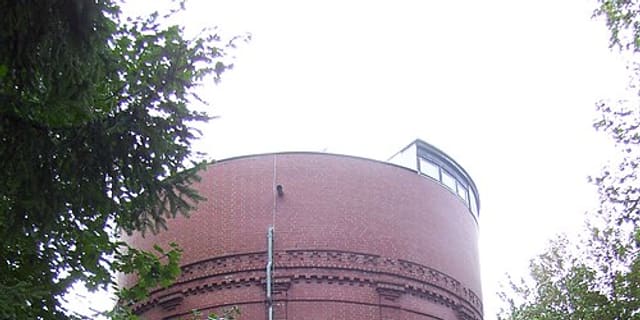
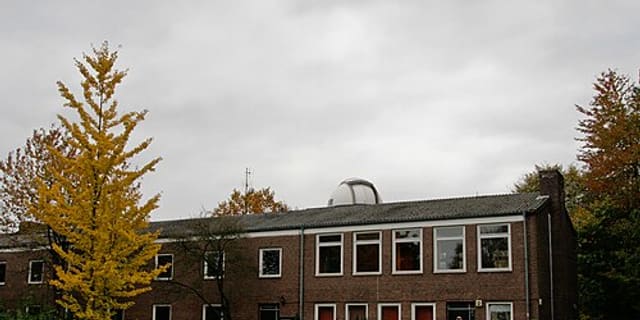
Sternwarte Greifswald is a public observatory housed in a former Physics Institute building near the university's main building, its 6-metre rotating dome sitting some 35 metres above ground. Since 1992 it has operated as a public observatory run by a nonprofit association, with a mission spanning academic teaching, amateur astronomy and public education through guided tours, lectures and exhibitions.
History
Astronomy at the University of Greifswald dates back to 1741, when Andreas Mayer was appointed professor, and the university's first observatory was established in 1775 in the Fangenturm tower near the Ryck River. The current observatory began operations on 12 July 1924.
Telescopes & research
Its centrepiece is a Carl Zeiss double telescope, said to be the only instrument of its kind in the world, combining a 20-centimetre refractor (3-metre focal length) with a 40-centimetre reflector (6.4-metre focal length, added in 1935), both supplied by Carl Zeiss Jena.
Location & getting there
The observatory is located on the University of Greifswald campus in Greifswald, a city near Germany's Baltic coast.
Visiting Sternwarte Greifswald
The observatory offers guided tours, lectures and exhibitions for the public; check with the University of Greifswald for current opening times before visiting.
See your named star from here
The unique double telescope at Sternwarte Greifswald was built to explore the sky by precise coordinates — exactly what comes with a star named through Star Register. Look up your star in the star catalogue to see its position over Greifswald.
Opening hours and public-visit programs vary by season. Check the official website and Google Maps for current times before you travel.
Institutional and reference sources used to verify this guide.
Satellite imagery: Esri, Maxar, Earthstar Geographics

 30 kmPublic
 175 kmPublic