
Sormano 2 Observatory
Satellite imagery: Esri, Maxar, Earthstar Geographics
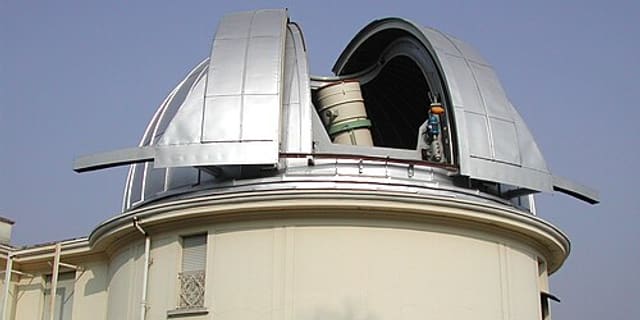
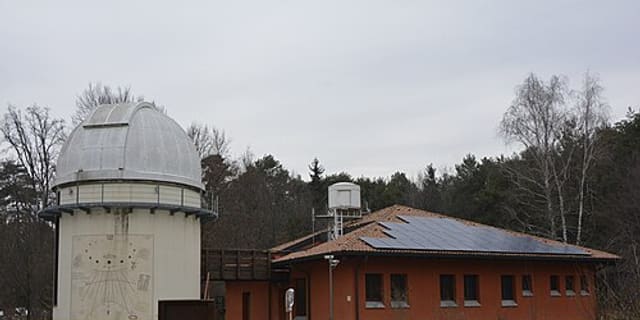
High in the pre-Alps north of Milan, at 1,000 metres above sea level, Sormano 2 Observatory has spent nearly four decades scanning the sky for asteroids and comets from the small mountain village of Sormano, Lombardy, Italy.
About Sormano 2 Observatory
The observatory was built in 1986 by the Gruppo Astrofili Brianza, an amateur astronomy association, and saw first light in January 1989. Its main instrument is the 50-centimetre Cavagna Telescope, a Ritchey-Chretien astrograph purpose-built for precise positional astronomy.
History
Around 2000 the observatory became a branch of INAF's Osservatorio Astronomico di Brera, linking its amateur roots to Italy's national astrophysics institute. Amateur astronomers associated with the site, including Marco Cavagna, Valter Giuliani, Piero Sicoli, Pierangelo Ghezzi, Francesco Manca, Paolo Chiavenna, Graziano Ventre, and Augusto Testa, helped build its long observing record.
Telescopes & research
Sormano 2's work centres on astrometric observations of minor planets and comets, contributing to near-Earth object tracking and risk assessment through partnerships with the Spaceguard Foundation and the International Asteroid Warning Network. Over its history the observatory has been credited with discovering 344 minor planets, including 344581 Albisetti, named for the Italian astronomer Walter Albisetti (1957-2013).
Location & getting there
The observatory sits at 1,000 metres elevation in the mountain village of Sormano, in Lombardy, Italy, in the pre-Alps north of Milan and close to the Swiss border, a setting that gives it notably darker, steadier skies than the nearby lowlands.
Visiting Sormano 2 Observatory
As a working research station run by an amateur astronomy group, Sormano 2 Observatory does not appear to publish regular public opening hours; anyone hoping to visit should check with Gruppo Astrofili Brianza or the observatory directly before travelling.
See your named star from here
Every star named through star-register.eu carries exact coordinates, and an observatory built for precision astrometry, like Sormano 2, is exactly the kind of site that could point a telescope at them. Browse the star catalogue or choose a naming package to name a star of your own.
Opening hours and public-visit programs vary by season. Check Google Maps for current times before you travel.
Institutional and reference sources used to verify this guide.
Satellite imagery: Esri, Maxar, Earthstar Geographics

 32 km
32 km
 38 km
38 km