
Sommers–Bausch Observatory

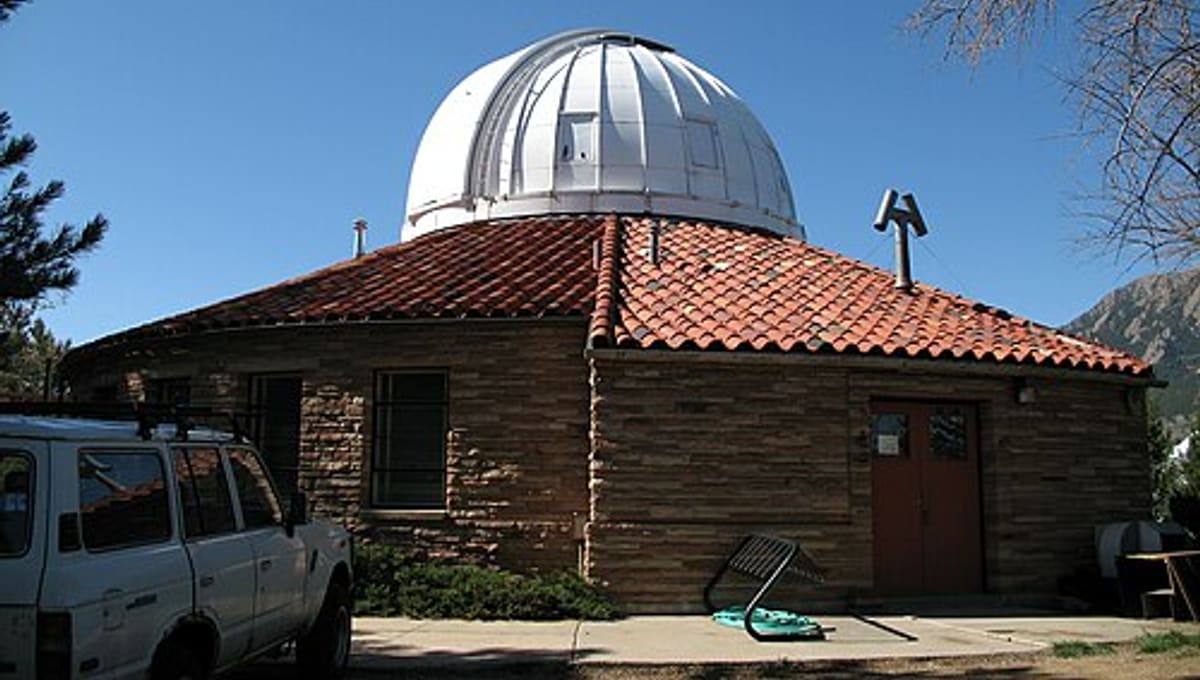
Image: Wikimedia Commons
On the main campus of the University of Colorado Boulder, the Sommers-Bausch Observatory has been putting telescopes in students' hands since the mid-20th century, named for Elmer E. Sommers and Carl L. Bausch.
About Sommers-Bausch Observatory
The observatory building was originally completed in 1953 and is operated by the university's Department of Astrophysical and Planetary Sciences (APS). It primarily supports teaching, alongside some research use, and also houses the department's lab classroom and computer lab.
Telescopes & research
Its instruments include two 20-inch Planewave CDK telescopes on Software Bisque Taurus 500 encoder mounts, a 24-inch Boller and Chivens Cassegrain reflector, and a 10-inch aperture heliostat for solar observation, plus a range of smaller telescopes and supporting equipment.
Location & getting there
The observatory sits directly on the University of Colorado Boulder's main campus in Boulder, Colorado, in the United States.
Visiting Sommers-Bausch Observatory
As a university teaching facility, visiting hours and public observing nights are best confirmed through the CU Boulder Department of Astrophysical and Planetary Sciences before you go.
See your named star from here
With a fleet of research-grade telescopes on site, Sommers-Bausch Observatory is well equipped to point at a named star's exact coordinates. If you've named a star with us, its position is ready to find, or browse the star catalogue to see what's already been named.
Opening hours and public-visit programs vary by season. Check Google Maps for current times before you travel.
Institutional and reference sources used to verify this guide.
Satellite imagery: Esri, Maxar, Earthstar Geographics

 45 km
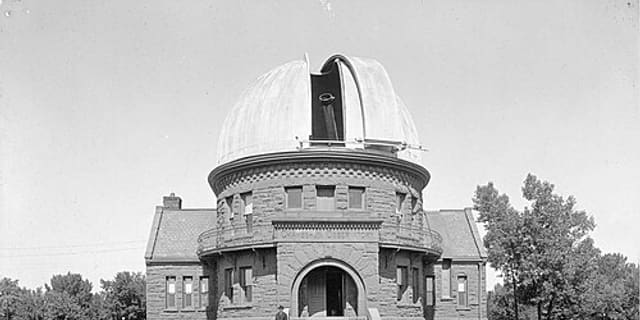
45 kmChamberlin Observatory
astronomical observatory in Denver, United States of America