
Rybachy Biological Station

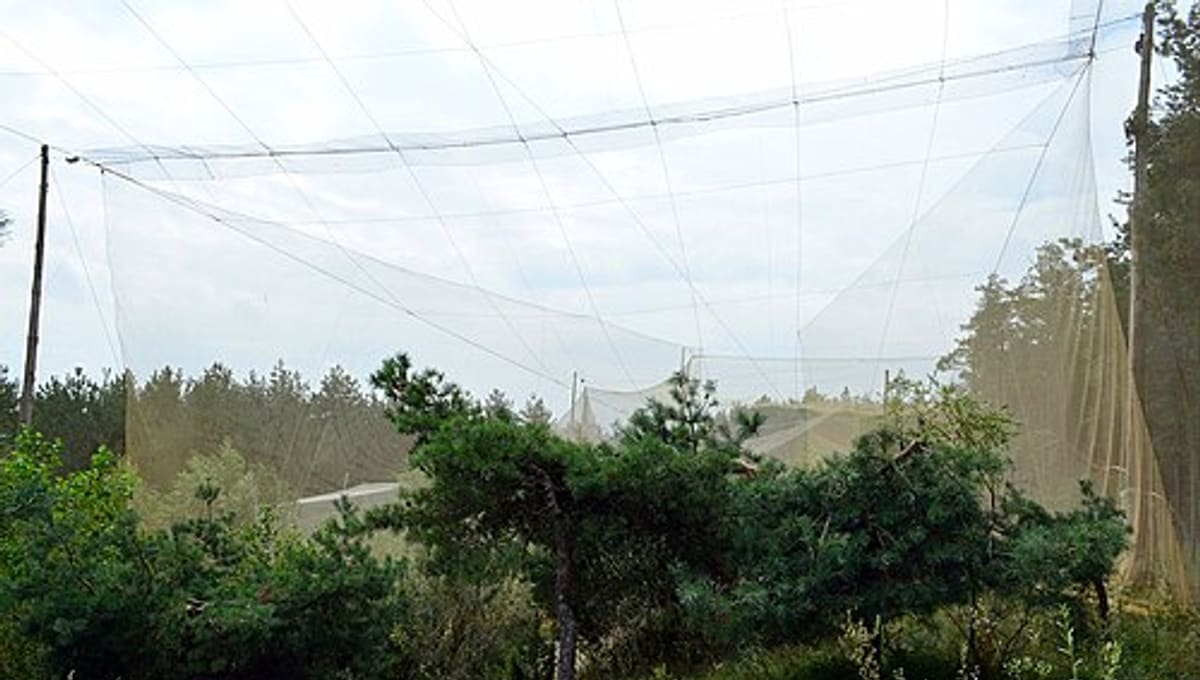
Image: Wikimedia Commons
Rybachy Biological Station sits on the narrow, forested Curonian Spit between the Baltic Sea and the Curonian Lagoon in Russia, a site better known for tracking migrating birds than the stars above it.
About Rybachy Biological Station
Rybachy is an ornithological field station run by the Zoological Institute of the Russian Academy of Sciences in St Petersburg. Its scientists study bird migration along the Curonian Spit, a roughly 97-kilometre sand-dune peninsula so important to migratory birds that it is often called a "bird bridge" between northern breeding grounds and wintering sites further south.
History
Scientific work at Rybachy resumed in 1956 under Soviet ornithologist Lev Belopolsky, continuing a tradition of bird research on the spit begun earlier by German scientists. A sister facility, the Fringilla field station, opened nearby in 1957 and still operates large traditional Rybachy-type bird traps.
Research
The station has built one of the world's most extensive continuous bird-ringing datasets, with a digitised database covering more than 3 million individual birds across some 200 species, and 30,000 to 40,000 new records added each year.
Location & getting there
The Curonian Spit is a UNESCO-listed strip of shifting dunes and pine forest stretching between Russia and Lithuania. Its narrow, low-lit setting away from major cities also makes for dark, uncluttered night skies, even though the station's own work here is biological rather than astronomical.
Visiting Rybachy Biological Station
Rybachy is primarily a research facility rather than a public attraction; check the station's official website for current information before planning a visit, as access for visitors may be limited outside organised tours of the Curonian Spit.
See your named star from here
Rybachy's business is birds, not telescopes, but the dark skies over the Curonian Spit are as good a place as any to look up. A star named through Star Register keeps the same coordinates wherever you view it from, so you can look it up in the catalogue and find it overhead on a clear night by the lagoon.
Opening hours and public-visit programs vary by season. Check Google Maps for current times before you travel.
Institutional and reference sources used to verify this guide.
Satellite imagery: Esri, Maxar, Earthstar Geographics

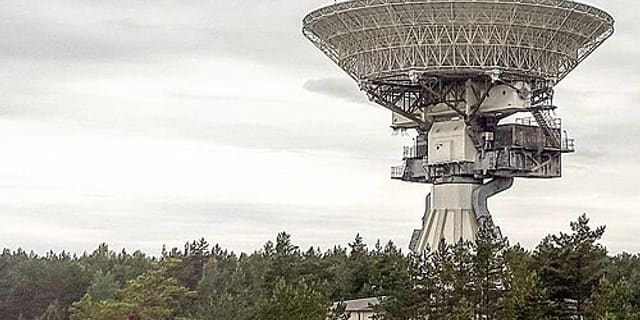 274 kmRadio
Ventspils International Radio Astronomy Center
radio astronomy institute and installation in Latvia

 285 km