
Prince Edward Point National Wildlife Area

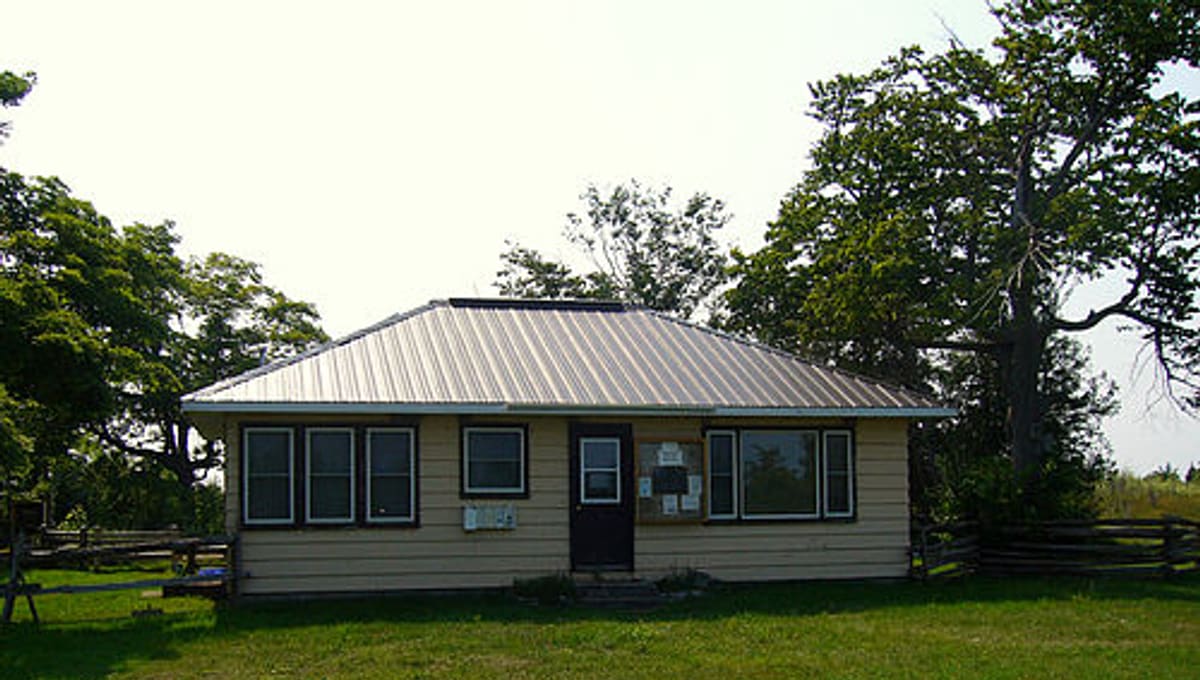
Image: Wikimedia Commons
At the southeastern tip of Prince Edward County, Ontario, the Prince Edward Point National Wildlife Area protects 560 hectares of shoreline that has drawn migrating birds - and birdwatchers - for decades.
About Prince Edward Point National Wildlife Area
The wildlife area was established in 1978, and the Prince Edward Point Bird Observatory that operates within it was founded in 1995 to monitor bird migration across the point, continuing work the Kingston Field Naturalists had carried out there in the 1970s and 1980s. It's recognised as a Globally Important Birding Area and an International Monarch Butterfly Reserve.
History
Bird migration monitoring at the point traces back to the Kingston Field Naturalists' fieldwork in the 1970s and 80s, before the observatory formalised the effort in 1995 with daily banding and census work.
Bird migration & research
More than 300 bird species have been documented at the point, with notable single-day counts including over 10,000 tree swallows and more than 70,000 dark-eyed juncos moving through during migration. The habitat mixes grassland and scrubland with limestone cliffs, ponds, and rare plants such as Ontario aster and downy wood-mint.
Location & getting there
The wildlife area sits at Prince Edward Point, the southeastern tip of Prince Edward County, Ontario, jutting into Lake Ontario.
Visiting Prince Edward Point National Wildlife Area
The site is managed as a national wildlife area; check Environment and Climate Change Canada's website for current access details before visiting, especially during banding season.
See your named star from here
Prince Edward Point isn't an astronomical observatory - its binoculars and nets are trained on migrating birds, not the night sky. But its remote shoreline setting, far from the light pollution of nearby cities, makes it a genuinely dark spot for naked-eye stargazing once the birdwatchers pack up. If you've named a star with Star Register, bring its coordinates and a star-finder app along on an evening visit. Browse the catalogue or name a star before you go.
Opening hours and public-visit programs vary by season. Check the official website and Google Maps for current times before you travel.
Institutional and reference sources used to verify this guide.
Satellite imagery: Esri, Maxar, Earthstar Geographics

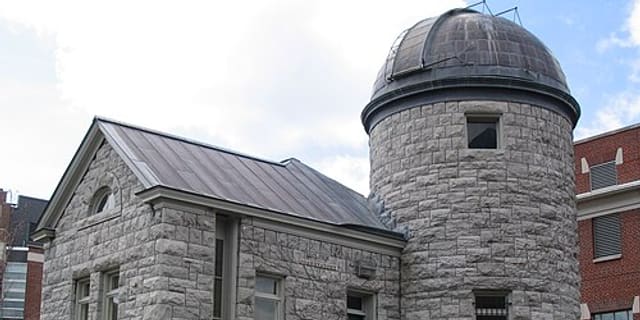 115 kmResearch
Holden Observatory
observatory on Syracuse University campus in Syracuse, New York
C. E. K. Mees Observatory
astronomical observatory at the University of Rochester

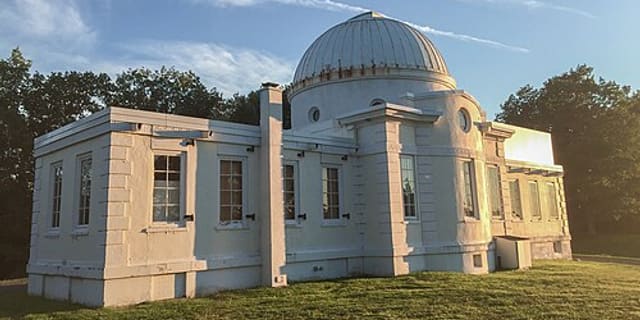 168 kmResearch
Fuertes Observatory
historical astronomical observatory at Cornell University, Ithaca, New York