
Pilar Magnetic Observatory
Satellite imagery: Esri, Maxar, Earthstar Geographics
Pilar Magnetic Observatory has monitored Earth's geomagnetic field from Pilar, in Córdoba province, Argentina, continuously since 1904.
About Pilar Magnetic Observatory
Pilar Magnetic Observatory is one of the oldest and most important scientific observatories in Argentina and Latin America. It was the first site on the continent to carry out permanent, continuous geomagnetic observations, and its early measurements contributed to the creation of the first isogonic chart of South America.
History
The observatory was founded on 1 July 1904 on a six-hectare property along the Xanaes River. It has operated without interruption since then, making it one of the longest-running scientific stations in the region.
Telescopes & research
Rather than optical telescopes, Pilar Magnetic Observatory runs geomagnetic, meteorological and seismological instruments, an electrometer, a sunspot telescope and solar radiation sensors. The site was modernised in 2010 with the digital INDIGO geomagnetic recording system and joined INTERMAGNET, the global network of magnetic observatories, in 2012.
Location & getting there
The observatory sits on a six-hectare site along the Xanaes River in Pilar, Córdoba province, Argentina.
Visiting Pilar Magnetic Observatory
As a working scientific monitoring station, general visiting hours aren't widely published; check with the operating institution before planning a visit.
See your named star from here
Pilar Magnetic Observatory tracks Earth's magnetic field rather than the night sky, but it does keep a sunspot telescope trained on the sun. A star named through Star Register comes with exact coordinates you can use with any telescope under the clear Córdoba skies nearby. Name a star or browse the star catalogue to find yours.
Opening hours and public-visit programs vary by season. Check Google Maps for current times before you travel.
Institutional and reference sources used to verify this guide.
Satellite imagery: Esri, Maxar, Earthstar Geographics

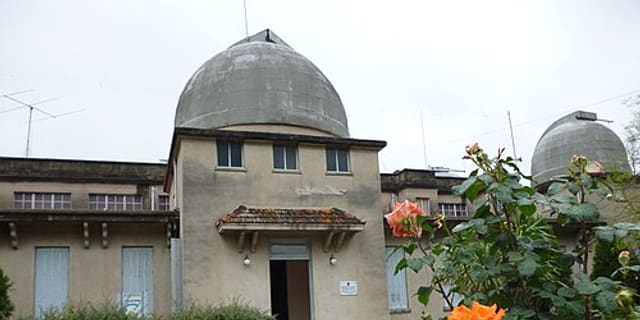 30 km
30 kmCode Astronomical Observatory - Santa Fe Space Observations Center
museum in Santa Fe, Santa Fe, Argentina

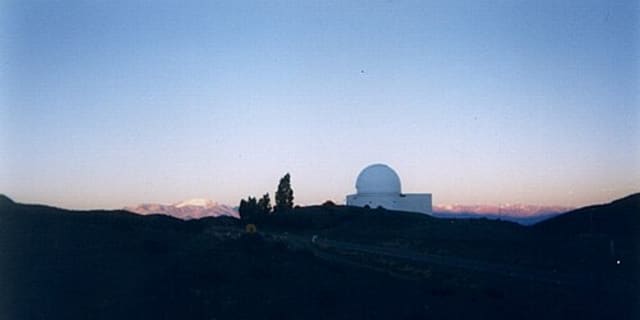 515 km
Alianza S4 observatory
astronomical observatory in San Juan Province, Argentina