
Paris Observatory, PSL University

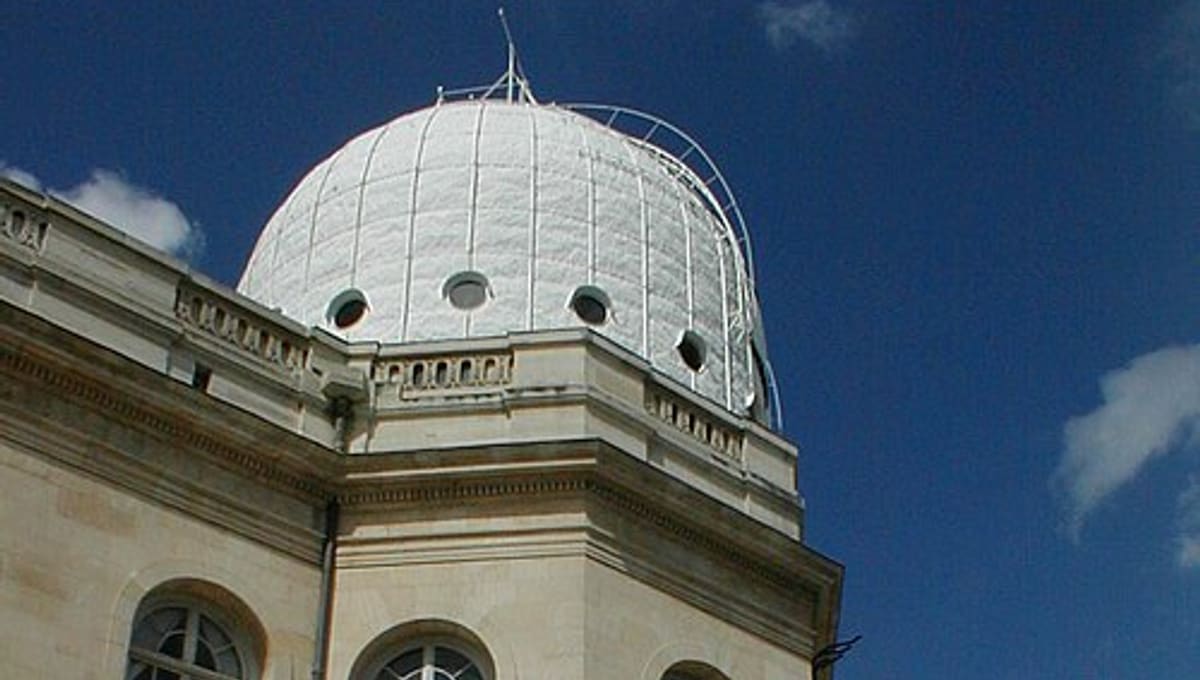
Image: Wikimedia Commons
Paris Observatory is the world's oldest observatory still in operation, a working research institution of Paris Sciences & Lettres University with its historic home on the Left Bank of the Seine.
About Paris Observatory
Founded as part of Louis XIV's drive to build a state-of-the-art scientific institution, Paris Observatory has grown into one of the largest astronomical centres in the world. Around 750 researchers, teaching-researchers, engineers, technicians and administrative staff work across its sites, making it responsible for roughly a quarter of France's entire astronomy and astrophysics workforce.
History
The observatory was established in 1667, complementing the French Royal Academy of Sciences founded the year before. It became a cornerstone of Western astronomy, and fields such as geodesy, cartography and meteorology developed there in France. Its historic building sits in central Paris, though most staff today work from a satellite campus in Meudon, southwest of the city.
Telescopes & research
Paris Observatory's research spans astrophysics and space-time metrology, combining theory, numerical methods, experimentation, observation and instrument development. It operates advanced radio telescopes at Nançay and produces France's official legal time along with ephemerides for celestial bodies. It also offers master's and doctoral academic programmes.
Location & getting there
The historic observatory building stands on the Left Bank of the Seine in central Paris, France, with a major satellite campus at Meudon to the southwest.
Visiting Paris Observatory
Check the official Paris Observatory website for current public tour dates, opening events and booking details before planning a visit.
See your named star from here
Paris Observatory has spent centuries mapping and timing the sky — a fitting place to think about a star of your own. Name a star and receive its exact coordinates, then explore it in our star catalogue or discover more historic sites on our observatories page.
Opening hours and public-visit programs vary by season. Check the official website and Google Maps for current times before you travel.
Institutional and reference sources used to verify this guide.
Satellite imagery: Esri, Maxar, Earthstar Geographics

 9 kmResearch
 10 kmSpace
The Space Observatory (Observatoire de l'Espace)
The Observatoire de l'Espace is the cultural laboratory of the CNES, the French space administration.

 16 km
16 km