
Observatorio Astronómico de Mallorca


Image: Wikimedia Commons
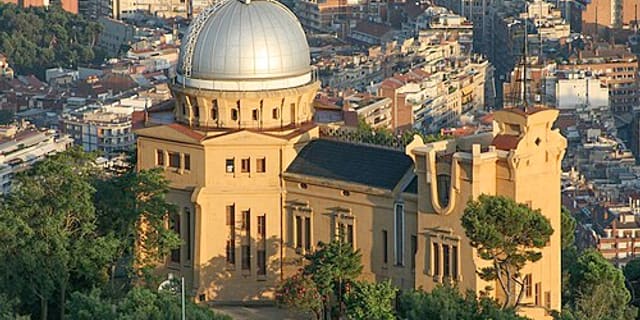
In Costitx, Mallorca, the Observatorio Astronómico de Mallorca (OAM) was, for over two decades, one of the most productive asteroid-hunting observatories in the world - though the facility itself closed in 2017.
About Observatorio Astronómico de Mallorca
Inaugurated in May 1991, the OAM was the first astronomical centre in the Balearic Islands. It became a pioneer among Spanish observatories by using robotic telescopes, including instruments located at La Sagra in Andalucía, to discover and track asteroids at scale.
History
Between 1999 and 2014, astronomers working with the OAM's robotic telescopes discovered approximately 5,000 asteroids, along with 20 extragalactic supernovae, 8 comets, and 7 variable stars. Its discoveries included the near-Earth object 2006 WH1 and, in February 2012, the asteroid Duende as it passed within 27,700 km of Earth. An asteroid found at the OAM in 2003 was later named after tennis player Rafael Nadal. By 2008 the observatory was tracking more than 2,000 asteroids, and Spain's position as the world's second-most-prolific asteroid-discovering country owes a great deal to the OAM's output. The observatory also housed a large planetarium open to the public and hosted summer schools with academic partners such as the Open University. In March 2017, however, the observatory closed and entered liquidation, with its land put up for auction at €1.7 million.
Location & getting there
The former observatory site sits at 206 metres elevation just south of Costitx, in the centre of Mallorca, Spain.
Visiting Observatorio Astronómico de Mallorca
The observatory closed in 2017 and is no longer operating as a public facility, so it cannot currently be visited for stargazing or planetarium shows.
See your named star from here
While the OAM itself is closed, a star named through Star Register can still be located from any working observatory with the right coordinates. Browse our observatories directory for an active site elsewhere in Spain, and check your star's exact position in the catalogue.
Opening hours and public-visit programs vary by season. Check the official website and Google Maps for current times before you travel.
Institutional and reference sources used to verify this guide.
Satellite imagery: Esri, Maxar, Earthstar Geographics

 209 km
 210 km