
National Radio Astronomy Observatory

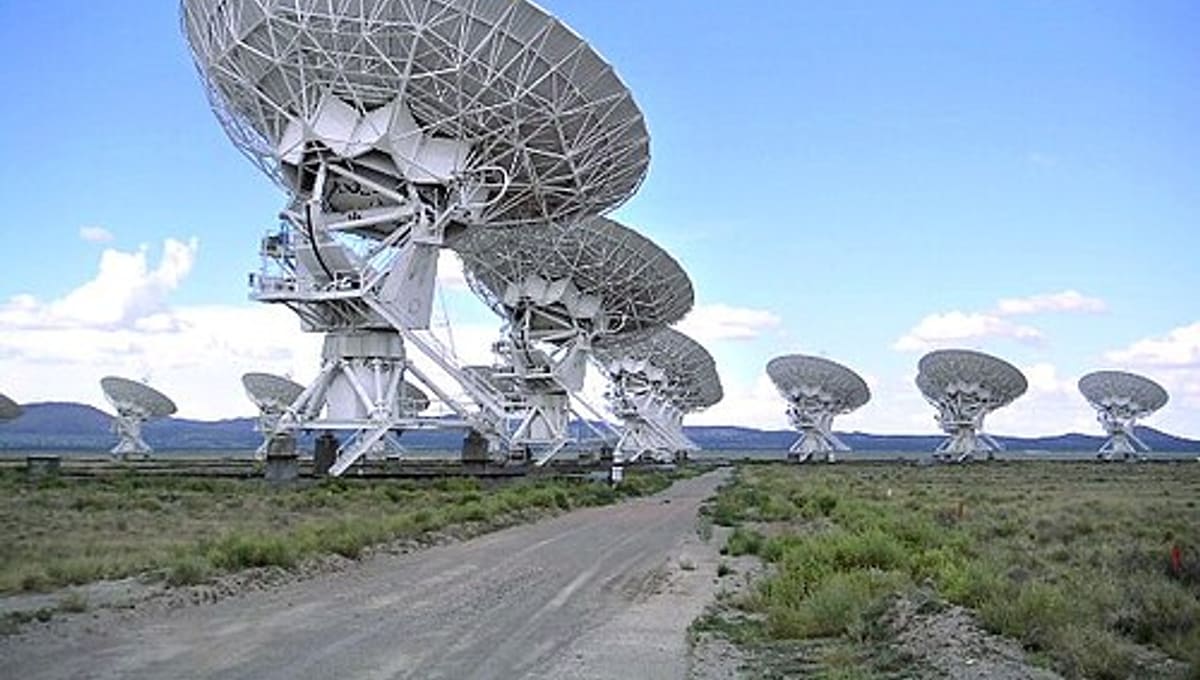
Image: Wikimedia Commons
The National Radio Astronomy Observatory (NRAO) has operated as a federally funded US research centre since 1956, with a public-facing site near Charlottesville, Virginia, welcoming visitors interested in radio astronomy.
About the National Radio Astronomy Observatory
NRAO is funded by the US National Science Foundation and operated under cooperative agreement by Associated Universities, Inc. It designs, builds and operates radio telescopes used by astronomers around the world to study everything from star formation to the growth of galaxies.
Telescopes & research
NRAO's instruments include the Very Large Array in New Mexico, an interferometer of dishes that can be spread across 22 miles of desert; the Very Long Baseline Array, ten linked antennas spanning more than 5,000 miles across the United States; and, through international partnership, the Atacama Large Millimeter/submillimeter Array (ALMA) high in the Chilean Andes. Together these facilities support research into black holes, galaxy formation and the evolution of the cosmos, with observing time awarded competitively on scientific merit.
Location & getting there
The Virginia site sits near Charlottesville and is linked to the University of Virginia's Department of Astronomy, which runs a public observatory night programme from the location.
Visiting
Public observing nights are organised through the University of Virginia's Department of Astronomy programme; phone ahead or check the official website for the current schedule, as sessions depend on weather and availability.
See your named star from here
NRAO's telescopes work in radio wavelengths rather than visible light, but the exact coordinates that come with a Star Register certificate work the same way everywhere: any observatory with a telescope aimed at the right RA and Dec can help you find your star. Explore the star catalogue or pick a naming package to get started.
Opening hours and public-visit programs vary by season. Check the official website and Google Maps for current times before you travel.
Not wheelchair accessible
Institutional and reference sources used to verify this guide.
Satellite imagery: Esri, Maxar, Earthstar Geographics

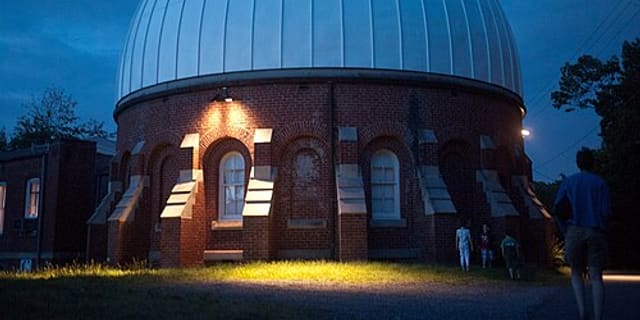 under 1 km
Mark Slade Remote Observatory
astronomical observatory in Virginia, United States

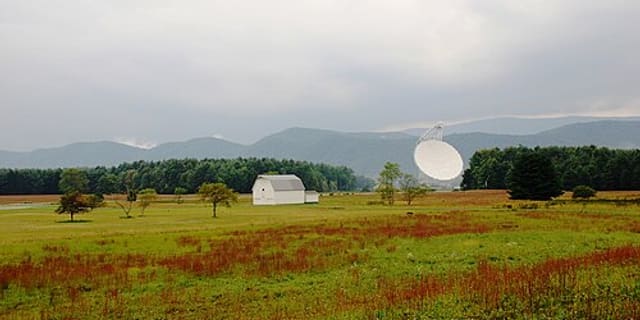 123 km
Green Bank Observatory
astronomical observatory in Green Bank, West Virginia, United States