
Lubomir Astronomical Observatory

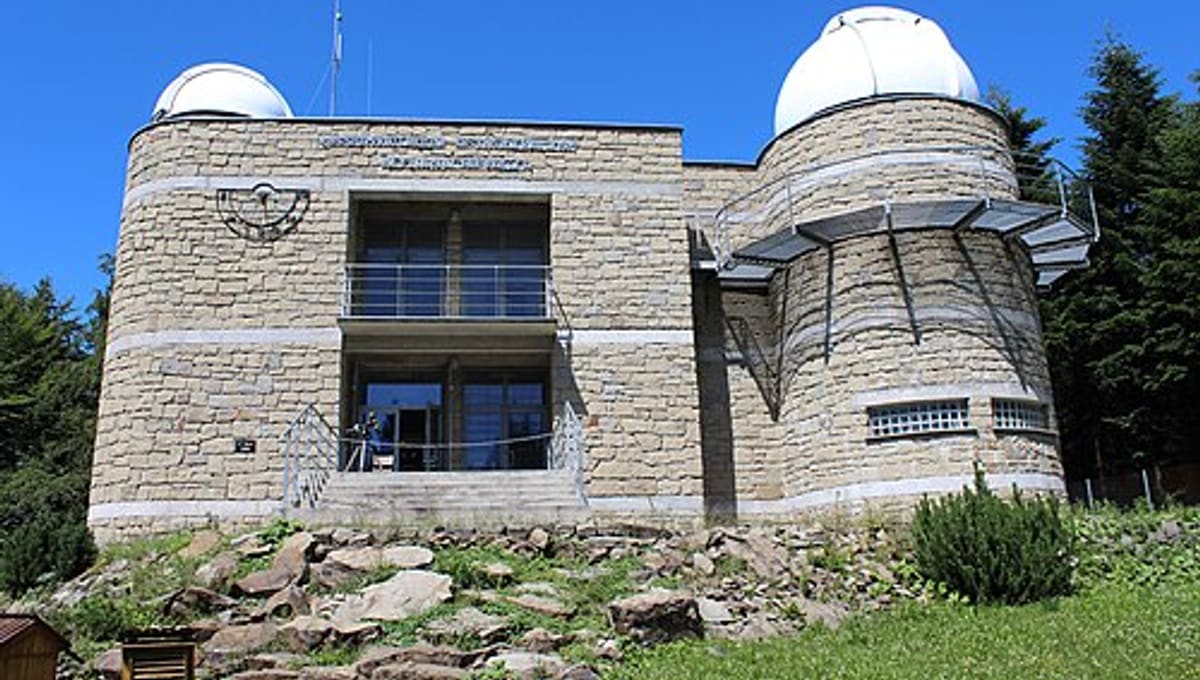
Image: Wikimedia Commons
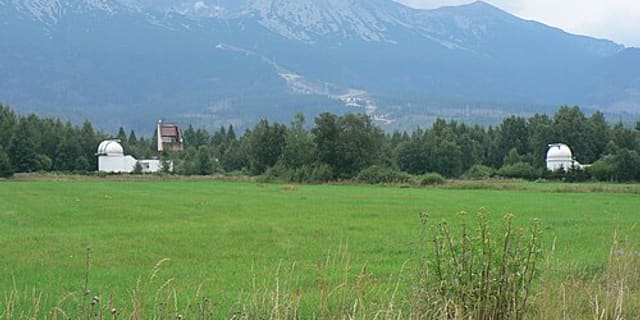
High on Mount Lubomir south of Kraków, the Lubomir Astronomical Observatory has watched Polish skies since 1922, making it one of the country's oldest amateur-turned-institutional observatories. Today it also carries the name of its founder, the Tadeusz Banachiewicz Astronomical Observatory.
About Lubomir Astronomical Observatory
The observatory sits on the summit of Mount Lubomir, roughly 30 km south of Kraków, Poland, chosen for its distance from city lights. It was built to give astronomers a darker sky than the city observatory in Kraków could offer.
History
Tadeusz Banachiewicz, director of Kraków Observatory, founded the site in 1922 specifically to escape encroaching light pollution. Astronomers working there discovered two comets: C/1925 G1 (Orkisz) in 1925 and C/1936 O1 (Kaho-Kozik-Lis) in 1936. The original building did not survive the Second World War — it was destroyed by fire from troops in 1944. The observatory was rebuilt and reopened on 6 October 2007, and it continues to operate under Banachiewicz's name.
Telescopes & research
The historic observatory was equipped with two refractors, of 135 mm and 76 mm aperture, used chiefly for observing variable stars — work that also produced its two comet discoveries in the 1920s and 1930s.
Location & getting there
Lubomir sits in the hills of southern Poland, part of the Beskid range near Myślenice, with the mountain setting still providing the darker skies the observatory was built for. Check the map on this page for exact directions.
Visiting Lubomir Astronomical Observatory
The observatory can be reached by phone for visit enquiries; before travelling, it is best to confirm current opening times and any tour arrangements directly with the site.
See your named star from here
If you've named a star through Star Register, staff at an observatory like this one can point a telescope at its exact right ascension and declination to bring your star into view. Look up your star's coordinates in our catalogue before you plan a visit.
Opening hours and public-visit programs vary by season. Check Google Maps for current times before you travel.
Institutional and reference sources used to verify this guide.
Satellite imagery: Esri, Maxar, Earthstar Geographics

 36 kmResearch
 36 km
36 km
 65 km
65 km
 70 km
70 km