
Göttingen Observatory

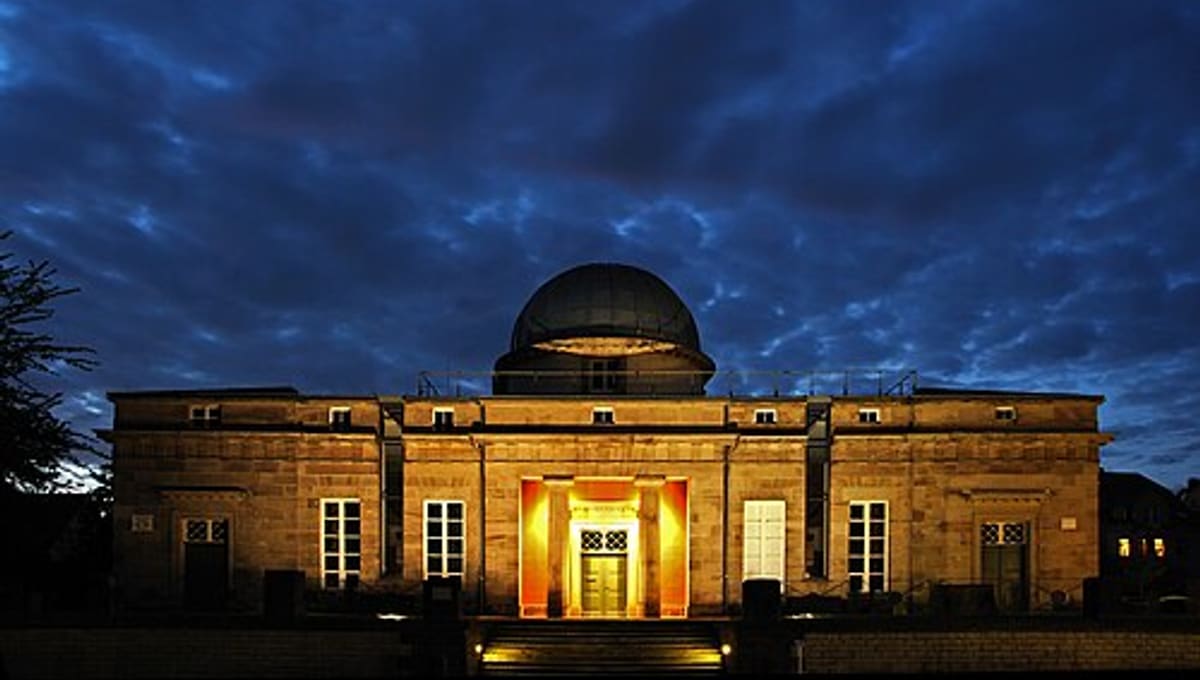
Image: Wikimedia Commons
Göttingen Observatory has watched the skies over Göttingen, in Germany's Lower Saxony, since the eighteenth century, and counts Carl Friedrich Gauss among its most famous directors.
About Göttingen Observatory
Known formally as the Universitätssternwarte Göttingen, or historically as the Königliche Sternwarte Göttingen, the observatory is affiliated with the University of Göttingen and is today operated by the university's Physics Department.
History
An initial observatory was commissioned in 1748 and built on Göttingen's southern city wall in 1750/51; it operated until 1822 and was eventually removed in 1897. Johann Andreas von Segner served as its first director, followed by Tobias Mayer, who became director in 1751. A new observatory building was funded by George III, in his role as Prince-Elector of Hanover, and planned by Georg Heinrich Borheck; construction ran from 1803 to 1816, delayed by the Napoleonic Wars. The mathematician and astronomer Carl Friedrich Gauss became the new observatory's first director, a post he held from 1815 to 1855.
Location & getting there
The observatory is located in the city of Göttingen, in Lower Saxony, in central Germany. Use the map on this page for exact coordinates and directions.
Visiting Göttingen Observatory
Göttingen Observatory operates as part of the University of Göttingen's Physics Department. Check the university's astrophysics pages for information on any public open evenings or tours before planning a visit.
See your named star from here
Few observatories have a history as rich as Göttingen's, where Gauss himself once studied the sky. Name a star to get its exact coordinates, or explore the star catalogue to see stars already named by others.
Opening hours and public-visit programs vary by season. Check the official website and Google Maps for current times before you travel.
Institutional and reference sources used to verify this guide.
Satellite imagery: Esri, Maxar, Earthstar Geographics

 34 kmPublic
 46 kmPublic