
Flower and Cook Observatory
Satellite imagery: Esri, Maxar, Earthstar Geographics
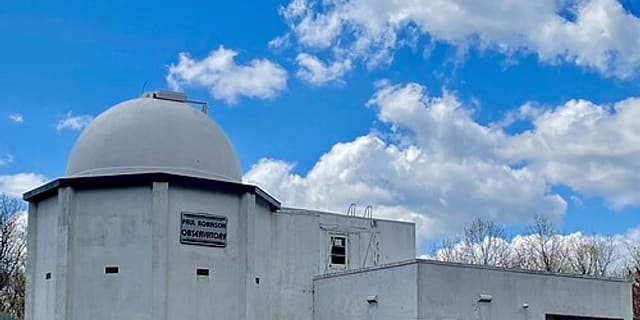
Flower and Cook Observatory carries the combined history of two separate University of Pennsylvania astronomy legacies, brought together over more than a century.
About Flower and Cook Observatory
The original Flower Observatory was established in 1897 on a 100-acre farm bequeathed by Reese Wall Flower in Upper Darby, equipped with an 18-inch Warner and Swasey refractor. Separately, the Gustavus Wynne Cook Observatory began at Cook's own home before relocating to his Wynnewood estate during the Depression, where it housed a 28.5-inch reflector, a 15-inch siderostat refractor, and a range of cameras and telescopes. On his death in 1940, Cook bequeathed all of these instruments to the University of Pennsylvania.
History
The two legacies were combined into a single facility, constructed in 1956 in Willistown Township, Chester County, Pennsylvania, on land purchased in the late 1940s on the recommendation of Charles P. Olivier. The observatory's work over the decades was documented in the Publications of the University of Pennsylvania. The University sold the observatory and its remaining four acres to neighbors in 2004, ending its life as a Penn-operated facility.
Location & getting there
The combined observatory stood in Willistown Township, Chester County, Pennsylvania, United States, within the North America region on Star Register.
Visiting Flower and Cook Observatory
Since the University of Pennsylvania sold the site in 2004, it is no longer operated as a public university observatory. Its history is preserved in University of Pennsylvania archives.
See your named star from here
Flower and Cook Observatory's decades of work relied on precise sky coordinates, the same principle behind every star named through Star Register. Name a star or browse the star catalogue.
Opening hours and public-visit programs vary by season. Check Google Maps for current times before you travel.
Institutional and reference sources used to verify this guide.
Satellite imagery: Esri, Maxar, Earthstar Geographics

 90 km
90 km