
Durham University Observatory

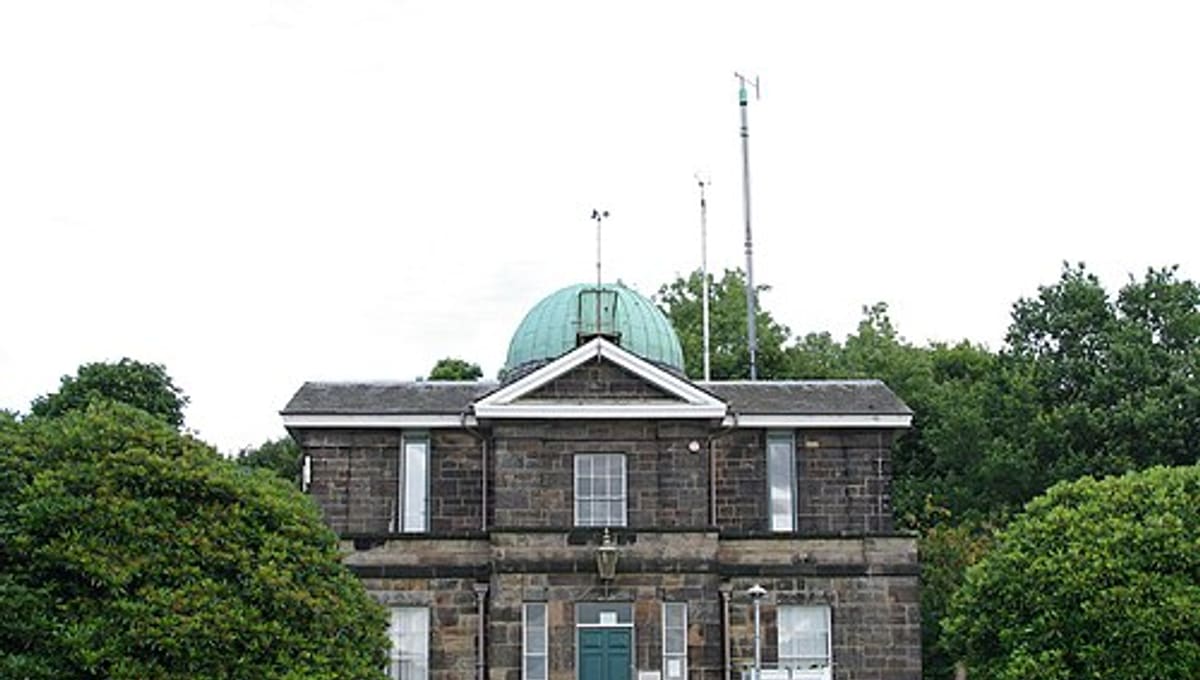
Image: Wikimedia Commons
Durham University Observatory is a Grade II listed building at Potters Bank in Durham, England, that has quietly recorded the region's weather, and in its earlier life its skies, since the 1830s.
About Durham University Observatory
Owned and operated by the University of Durham, the observatory is now led by Professor Tim Burt of the Geography Department, who is also Master of Hatfield College. Its current role centres on long-term meteorological recording rather than public astronomy.
History
The observatory was founded in 1839 by Temple Chevallier as a combined astronomical and meteorological station, in part to calculate atmospheric refraction from air temperature readings. In 1937 it moved to focus purely on meteorology. Its weather records date back to 23 July 1843, giving Durham the third longest unbroken meteorological record in the UK, after the Radcliffe Observatory in Oxford (from 1772) and Armagh Observatory (from 1795). Observations were taken manually until 1999, when a Met Office automatic weather station took over, and the site is recognised as a World Meteorological Organization Centennial Observing Station. In 2022, Oxford University Press published Durham Weather and Climate since 1841, drawing on the observatory's archive.
Location & getting there
The observatory stands at Potters Bank in the city of Durham, England, within the university's estate.
Visiting Durham University Observatory
As a working meteorological station and listed building, the observatory is not generally open for casual public visits. Check with the University of Durham's Geography Department for any current access arrangements before travelling.
See your named star from here
Durham's observatory today is dedicated to weather records rather than public stargazing, but the coordinates of any named star can still be aimed by a telescope anywhere under a dark sky, including with a local astronomy club near Durham. Find a star's exact position in our star catalogue.
Opening hours and public-visit programs vary by season. Check Google Maps for current times before you travel.
Institutional and reference sources used to verify this guide.
Satellite imagery: Esri, Maxar, Earthstar Geographics


 95 kmMuseum