
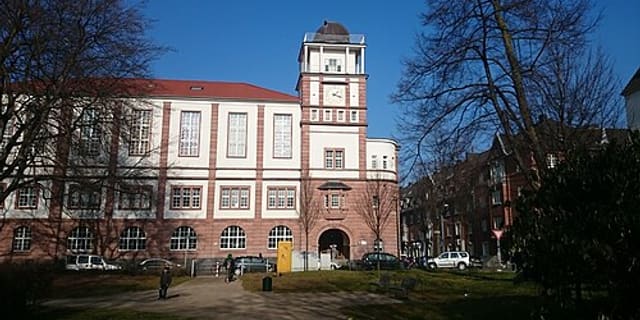
Düsseldorf-Bilk Observatory

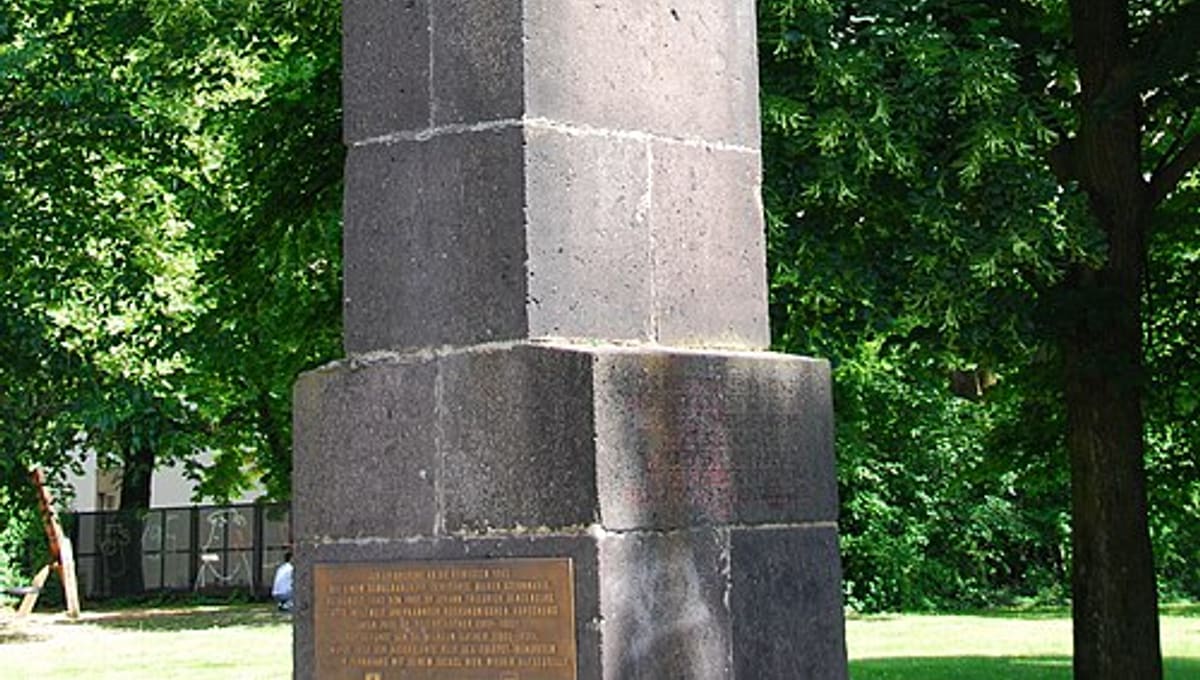
Image: Wikimedia Commons
Though it no longer stands, the Düsseldorf-Bilk Observatory, also known as Sternwarte Düsseldorf or Sternwarte Charlottenruhe, left a lasting mark on 19th-century astronomy from its site in the Bilk district of Düsseldorf, Germany.
About Düsseldorf-Bilk Observatory
The observatory was a private institution founded in 1843 by Johann Friedrich Benzenberg, at an elevation of 40 metres. Its main instrument was a refracting telescope with an 1,800mm focal length. After Benzenberg's death, the observatory was bequeathed to the city of Düsseldorf, but it was destroyed by bombing in 1943.
History
Between 1852 and 1890, astronomer C. Robert Luther discovered 24 asteroids from the observatory, from Thetis on 17 April 1852 to Glauke on 20 February 1890, a body of work still known today as the "24 Düsseldorf planets." The asteroid 4425 Bilk was later named in the observatory's honour. Near the original site, a benchmark now stands displaying the observatory's burnt-out telescope as a memorial to its history.
Location & getting there
The former observatory site is in the Bilk district of Düsseldorf, Germany, at an elevation of around 40 metres.
Visiting Düsseldorf-Bilk Observatory
The observatory building itself no longer exists, but visitors can see the memorial benchmark near its original location in Bilk, marking the site of Luther's asteroid discoveries.
See your named star from here
Düsseldorf-Bilk's legacy is a reminder that precise sky coordinates, like those Luther once used to track new asteroids, are exactly what's needed to find a named star today. Look up your star's position in our star catalogue.
Opening hours and public-visit programs vary by season. Check Google Maps for current times before you travel.
Institutional and reference sources used to verify this guide.
Satellite imagery: Esri, Maxar, Earthstar Geographics

 15 kmPublic
 26 km
26 km
 28 kmPublic
 30 km
30 km