
Cardiff observatory
Satellite imagery: Esri, Maxar, Earthstar Geographics
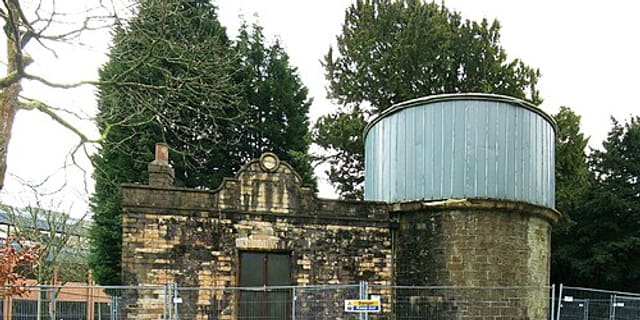
Cardiff's astronomical story runs through Penylan Observatory, which stood in Cyncoed Gardens from 1906 until 1979, and continues today through the Cardiff Astronomical Society.
About Cardiff Observatory
Penylan Observatory was formally dedicated for public use on 6 October 1906 and, for its time, housed the largest telescope in Wales, mounted on a Berton model with a revolving dome and shutters.
History
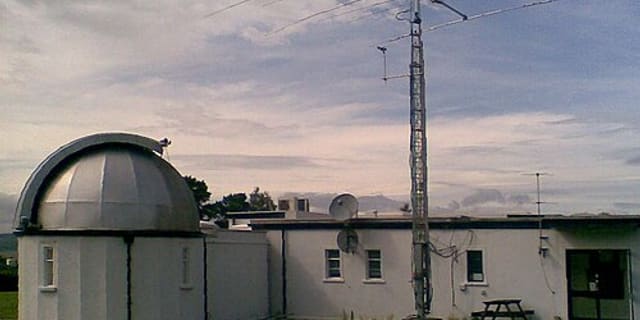
The observatory was deliberately sited around 200 feet above sea level, high enough to sit above what contemporaries described as the "haze and smoke of Cardiff." It had a full-time curator and an adjoining lecture room, and admitted the public free of charge from September to April, 6pm to 10pm. It closed in 1979, and its telescope was later melted down for scrap. Since the 1970s, the Cardiff Astronomical Society has operated the Dyffryn Observatory, equipped with an 11-inch Celestron Schmidt-Cassegrain telescope, carrying public astronomy in Cardiff forward.
Location & getting there
Penylan Observatory stood in Cyncoed Gardens, Cardiff, Wales, on raised ground chosen specifically to rise above the city's smoke and light.
Visiting Cardiff Observatory
The original Penylan Observatory no longer operates, but the Cardiff Astronomical Society continues public astronomy in the city through Dyffryn Observatory; check the society's website for current opening times and events.
See your named star from here
Cardiff's long history of public stargazing, from Penylan's Victorian dome to today's Dyffryn Observatory, is exactly the kind of tradition a Star Register star fits into. Name a star or browse the star catalogue to find its coordinates.
Opening hours and public-visit programs vary by season. Check Google Maps for current times before you travel.
Institutional and reference sources used to verify this guide.
Satellite imagery: Esri, Maxar, Earthstar Geographics

 58 km
58 km
 92 km
92 km
 129 kmRadio