
Brorfelde Magnetic Observatory

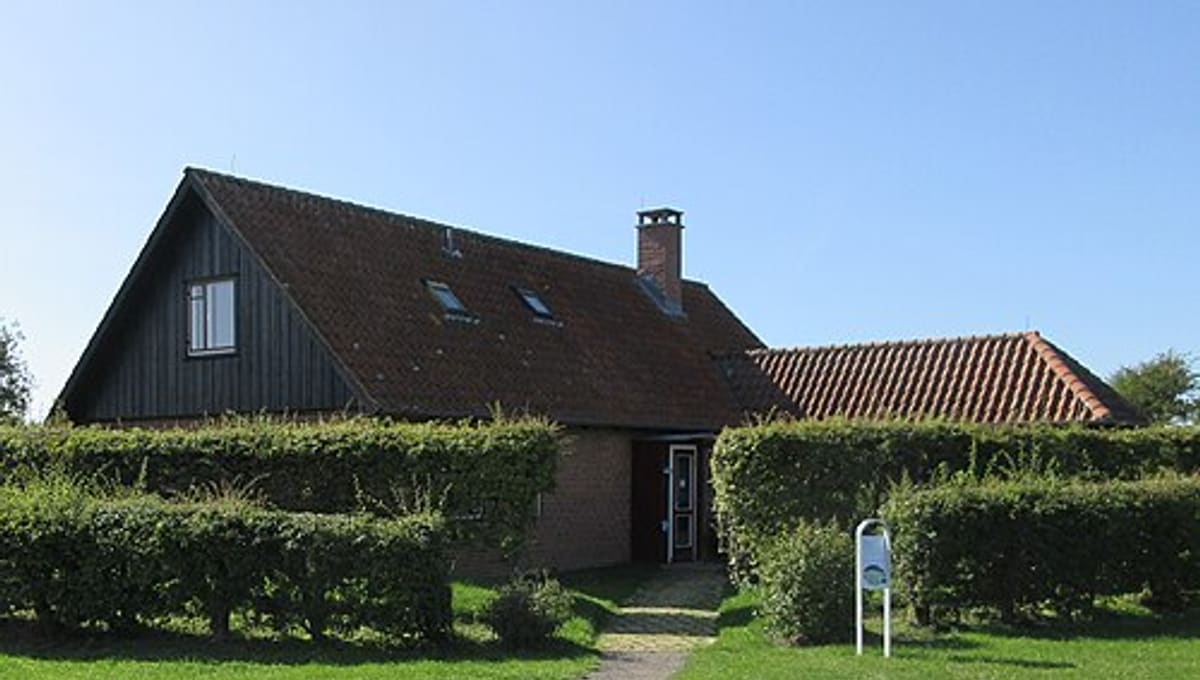
Image: Wikimedia Commons
Brorfelde Observatory lies near Holbæk, Denmark, on a protected patch of countryside kept deliberately dark so its historic telescopes can still see the stars clearly.
About Brorfelde Observatory
Founded by the University of Copenhagen, Brorfelde operated as a branch of the Copenhagen University Observatory until 1996, when its operating staff relocated to the Rockefeller Complex in Copenhagen — though its telescopes have remained in use by university students ever since. Around the site, 40 hectares of surrounding land are protected specifically to preserve natural darkness from light pollution.
History
The observatory was established in 1953 to replace the older Østervold Observatory. Its founder was the astronomer Bengt Strömgren, with Poul Jensen and Karl Augustesen among the key astronomers who worked there. In 2016, a discovery centre reopened on the site, expanding its focus to astronomy, geology, engineering and biology for visitors.
Telescopes & research
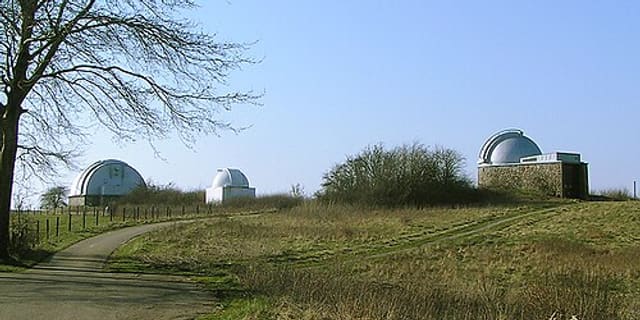
Brorfelde's primary instrument is a 77-centimetre Schmidt telescope, installed in 1966 and originally used with photographic film. Observations from the site have led to the discovery of more than 100 minor planets, including asteroid 3309 Brorfelde, named in a citation in 1987.
Location & getting there
Brorfelde Observatory is located near Holbæk, Denmark, in the Europe region, surrounded by a protected dark-sky area. Use the map and directions button on this page for current travel details.
Visiting Brorfelde Observatory
The site's 2016 discovery centre welcomes visitors with exhibits spanning astronomy and the natural sciences; check the observatory's official website for current opening hours and any admission fees before visiting.
See your named star from here
A telescope that has already found more than 100 minor planets in this protected dark sky is well placed to help you picture exactly where your own named star sits. Browse the star catalogue to find its coordinates.
Opening hours and public-visit programs vary by season. Check Google Maps for current times before you travel.
Institutional and reference sources used to verify this guide.
Satellite imagery: Esri, Maxar, Earthstar Geographics

 under 1 km
 40 km
40 km
 57 kmResearch
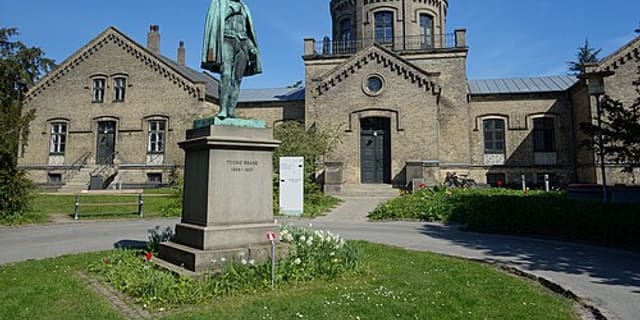
Østervold Observatory
former astronomical observatory of the University of Copenhagen in Denmark