
Bassano Bresciano observatory
Satellite imagery: Esri, Maxar, Earthstar Geographics
In Bassano Bresciano, in Italy's Lombardy region, this fully automated observatory has spent more than three decades tracking minor planets and, more recently, gamma-ray bursts from its dome near Brescia.
About Bassano Bresciano observatory
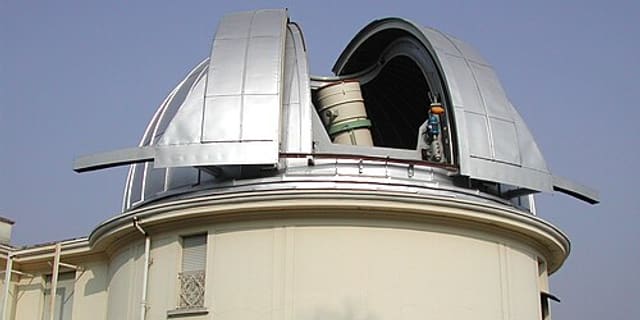
The observatory sits at 58 metres elevation in Bassano Bresciano, in the province of Brescia, and holds the official IAU observatory code 565. Its main instrument is a 42cm Schmidt telescope on an equatorial fork mount, fitted with a Starlight HX516 CCD camera and housed in a 5-metre dome. The facility is fully automated and capable of remote operation.
History
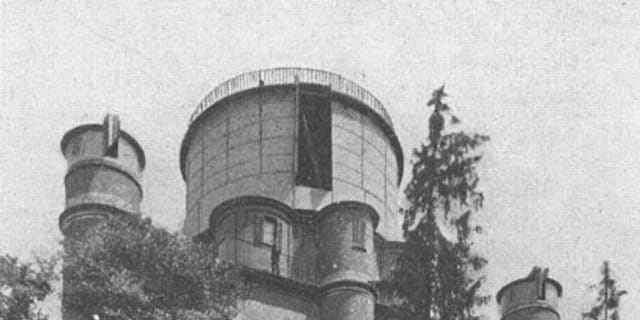
The observatory's first astrometric measurements were published in 1983 using a 15cm reflecting telescope. It was officially inaugurated on 29 April 1989, when the 42cm Schmidt telescope became its main instrument. In 2011 it joined the international gamma-ray burst coordinates network, adding rapid-response transient astronomy to its work.
Telescopes & research
Early research at Bassano Bresciano focused on the astrometry of minor planets and comets, work that led to the discovery of several minor planets now named for the observatory's team and locality: 6460 Bassano, 6793 Palazzolo, 6981 Chirman and 22370 Italocalvino. The observatory's research has since shifted toward photometric observations of planets and variable stars, alongside its role monitoring gamma-ray burst alerts.
Location & getting there
Bassano Bresciano is a small town in Lombardy, in the province of Brescia in northern Italy, at a modest 58 metres above sea level.
Visiting Bassano Bresciano observatory
As a research-focused, automated facility, the observatory isn't primarily a public visitor attraction; check with local astronomy associations in Brescia for any scheduled open evenings before planning a visit.
See your named star from here
An observatory with a working 42cm telescope and its own history of discovery is a fitting place to think about a star named through Star Register. Name a star as a gift, or browse the star catalogue to see what others have named.
Opening hours and public-visit programs vary by season. Check Google Maps for current times before you travel.
Institutional and reference sources used to verify this guide.
Satellite imagery: Esri, Maxar, Earthstar Geographics

 70 km
70 km
 76 kmMuseum